Florida’s dengue alerts in 2026 highlight an important public-health message: effective mosquito prevention depends on cooperation between health authorities, mosquito control programs, property owners, and local communities.
Recent developments across Florida have reinforced the importance of monitoring mosquito populations and reducing conditions that allow mosquitoes to reproduce.
For Miami residents, understanding these risks is particularly important because South Florida’s warm climate allows mosquitoes to remain active throughout much of the year.
Dengue Cases and Mosquito Control Efforts in Miami-Dade
On August 3, 2026, the Florida Department of Health in Miami-Dade County issued a mosquito-borne illness alert after confirming a locally acquired dengue case.
Health officials announced that they were coordinating surveillance, prevention, and control activities with Miami-Dade County Mosquito Control.
In an October 1 update, Miami-Dade County reported eight locally transmitted dengue cases and described its continued mosquito surveillance and treatment efforts.
These figures reflect the information reported by local authorities at that time and should not be interpreted as a live case count.
What Is Dengue and How Is It Transmitted?
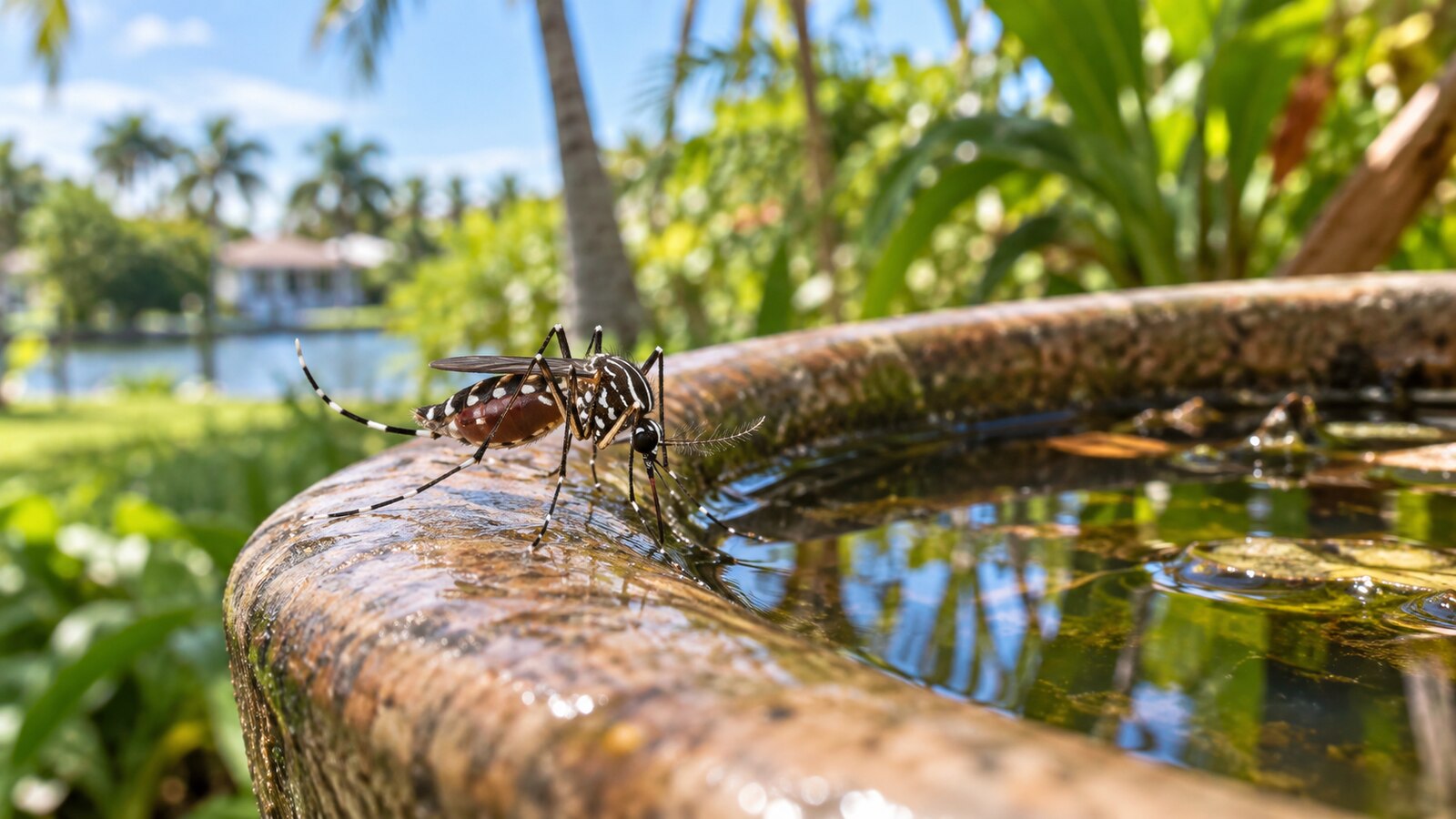
Dengue is a viral illness transmitted primarily through the bite of infected Aedes aegypti mosquitoes.
Possible symptoms include:
- Fever
- Severe headaches
- Muscle and joint pain
- Nausea
- Skin rash
Symptoms can vary, and some infections may become serious.
Anyone experiencing concerning symptoms should seek advice from a healthcare professional.
Dengue is not transmitted through ordinary person-to-person contact. Mosquito control services help address mosquito activity but do not diagnose or treat illness.
Why Coordinated Mosquito Control Matters
Mosquito management is most effective when different prevention efforts work together.
Public-health authorities monitor disease activity, while county mosquito control teams inspect breeding areas, track mosquito populations, and implement control measures when necessary.
Miami-Dade County reported that its mosquito control program services more than 350 mosquito traps weekly as part of its surveillance activities.
Residents and property managers also play an essential role.
Reducing standing water and maintaining outdoor areas can help limit opportunities for mosquitoes to breed.
Professional mosquito inspections may identify additional conditions contributing to persistent mosquito activity around a specific property.
Five Ways to Reduce Mosquito Activity Around Your Property
1. Eliminate Standing Water
Regularly empty containers that collect rainwater, including flowerpots, buckets, unused tires, and outdoor equipment.
2. Maintain Gutters and Drainage
Check gutters, drains, and low areas where water can accumulate after rainfall.
3. Protect Doors and Windows
Maintain screens and repair openings that allow mosquitoes to enter your home.
4. Use Appropriate Personal Protection
Follow public-health recommendations for EPA-registered insect repellents and protective clothing.
5. Schedule a Professional Assessment When Needed
If mosquito activity continues despite preventive measures, a professional inspection can help identify breeding and resting areas and determine appropriate control options.
Mosquito Season Doesn’t End When Summer Does
Although rainfall and mosquito populations may decline during certain periods, mosquito activity does not disappear completely in Miami-Dade County during fall.
Small containers holding water can continue to support mosquito development.
That’s why prevention should remain part of year-round property maintenance.
Ronin Pest Control Miami: Helping Reduce Mosquito Activity
At Ronin Pest Control Miami, we understand how frustrating persistent mosquito problems can become, particularly around patios, gardens, and outdoor living spaces.
Our mosquito control services begin by evaluating the property and identifying conditions that may contribute to mosquito activity.
A site-specific management plan can help address these conditions and reduce mosquito pressure.
Concerned about mosquitoes around your Miami property?
Contact Ronin Pest Control Miami to request a scheduled inspection.
Call (786) 808-8506.
Sources
- Florida Department of Health in Miami-Dade County — Mosquito-Borne Illness Alert, August 3, 2026.
- Miami-Dade County — Fall Season Mosquito Control Update, October 1, 2026.
- Pest Control Technology — Florida Dengue Outbreak Reinforces Collaborative Control Efforts.